
Best Mattress for Back Pain Australia
Seven mattresses ranked on the two things the research actually connects to back pain: support that keeps the spine level, and a comfort layer that lets the hips and shoulders settle. Prices update automatically every day.
What does the research say about mattresses and back pain?
Most people with a sore back go looking for the firmest mattress they can find. The best evidence says that is the wrong instinct.
The trial usually cited is Kovacs and colleagues, published in The Lancet in 2003: 313 adults with chronic non-specific lower back pain, randomly assigned to a firm mattress or a medium-firm one, neither group told which they had. The medium-firm group did better, on pain in bed, pain on rising, and disability. A 2021 review in the Journal of Orthopaedics and Traumatology covering 39 studies reached the same conclusion, and added the mechanism: a mattress that is too firm stops the shoulder and hip sinking in far enough, which leaves the spine bent rather than straight, while one that is too soft lets the hips drop below the line of the back.
So the target is medium-firm — firm enough to hold the hips up, soft enough to let the shoulder in. That is what every score on this page is built to measure, and it is why the firmest mattress we review is not our first pick for a sore back. None of this is medical advice. Pain that is new, severe, or comes with numbness belongs with a GP or physiotherapist, not a mattress.
Which mattresses are best for back pain? Seven, ranked
How the Back Pain Score works. It is the average of two sub-scores from our own reviews: support, which is whether the mattress holds the spine in line, and comfort, which is whether the shoulder and hip can settle instead of being pressed. Those are the two things the research above names. Every card prints both numbers, so you can check the arithmetic, and the list runs from highest to lowest. The Yinahla and the LUXE both average 9.55, so they share first place.
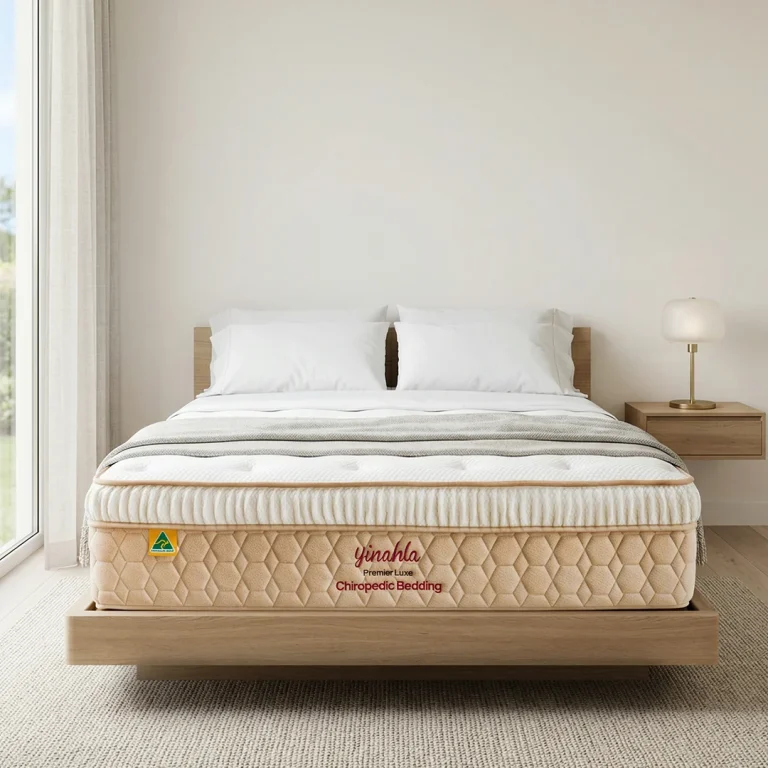
It holds the two credentials that matter for this exact problem, and nothing else we cover holds both: the Australian Spinal Research Foundation endorsement and Bedbuyer’s Best Back Care Mattress award. Its zoned springs firm up under the hips and soften at the shoulders, so the spine stays level instead of being pushed straight — which is what the research says a back actually needs, and what one uniform firmness cannot give you. Support scores 9.7 and comfort 9.4 in our review, which is where this 9.6 comes from.
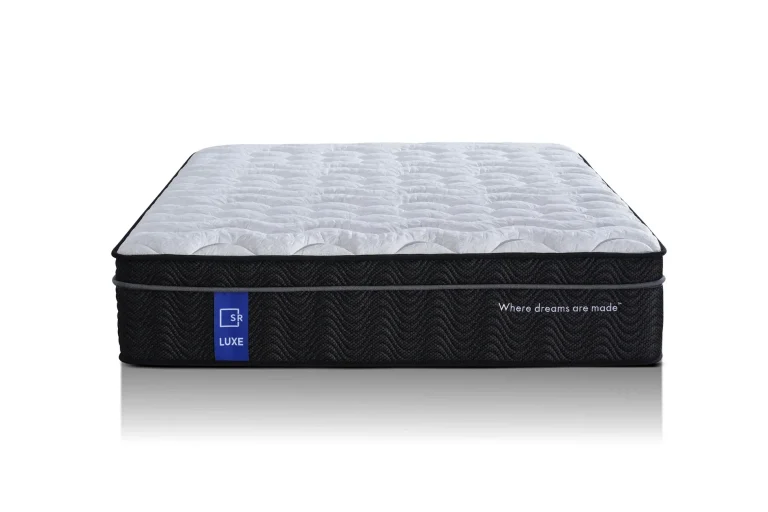
Seven zones of pocket springs firm up under the hips and give at the shoulders, and Sleep Republic rates it Medium, 6 out of 10, inside the band the research supports. It carries the same Australian Spinal Research Foundation endorsement as the standard Sleep Republic, and its comfort score of 9.6 is the highest we give any mattress. Support scores 9.5 and comfort 9.6 in our review, which is where this 9.6 comes from.
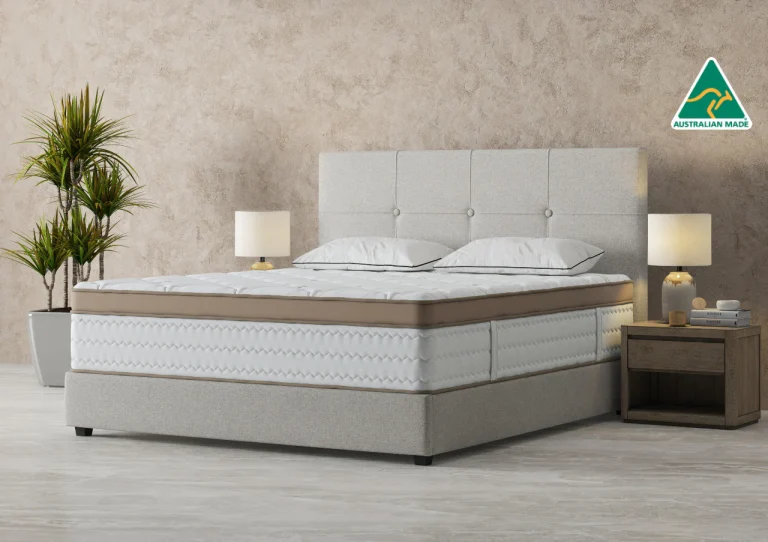
A medium feel over a pocket-spring core, which puts it in the band the evidence supports rather than at the hard end. Build quality scores 9.8 in our review, the joint highest sub-score we give, and the 10-year warranty is on a mattress handmade here rather than shipped in. Support scores 9.5 and comfort 9.3 in our review, which is where this 9.4 comes from.
$100 off any Luxara mattress, applied for you through this link BESTMATTRESS100
Want to spend less? The Luxara Classic ($1,890 Queen) has a 7cm pillow top and comes in Soft, Medium or Firm. We score the Platinum only.
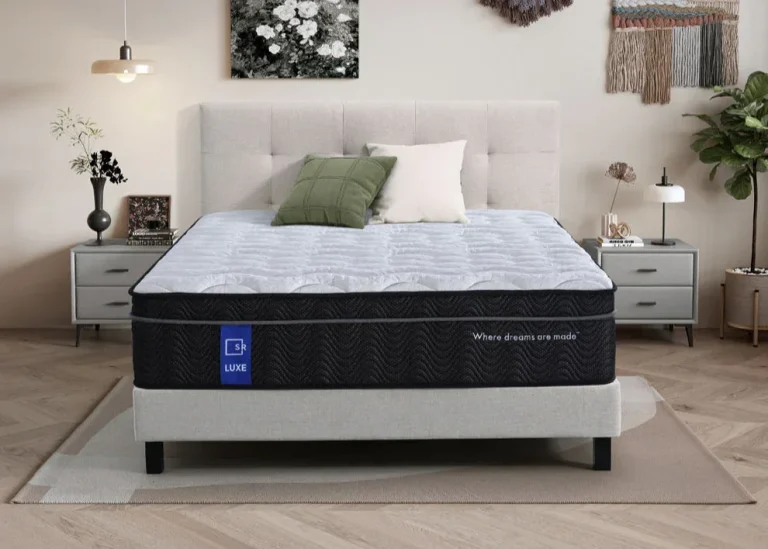
This is the pick we make most often for back pain. It carries the same Australian Spinal Research Foundation endorsement as the Yinahla, sits at 7 out of 10 on firmness — Sleep Republic’s own Medium/Firm rating, inside the band the research supports — and runs 1,850 pocket springs so the load spreads instead of concentrating at the hips. 4.8 out of 5 from 2,157 owners. Support scores 9.5 and comfort 8.5 in our review, which is where this 9.0 comes from.
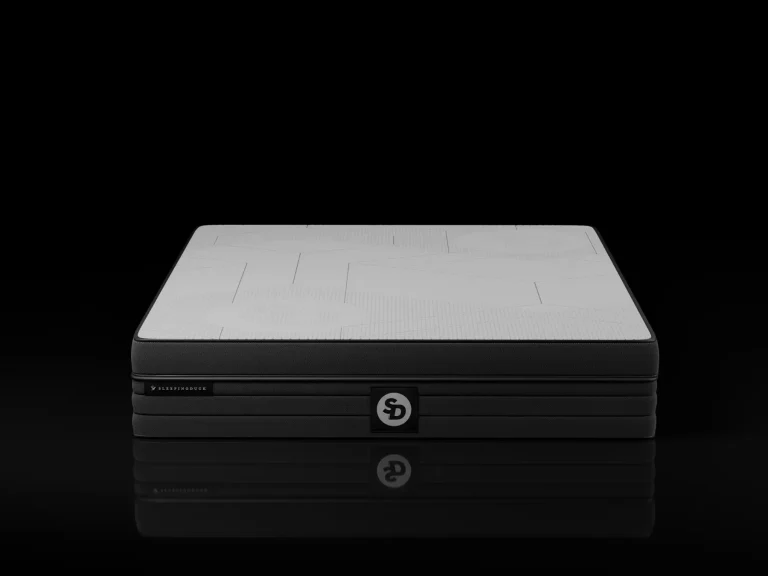
You choose medium or firm, and Sleeping Duck lets you change the firmness with free foam swaps for 100 nights, so you can move along the medium-firm band the research points to instead of guessing once. Its independent springs have tailored support zones and a reinforced edge, and it has the deepest owner pool on this page: 4.8 out of 5 from 5,742 ProductReview reviews. Support scores 9.0 and comfort 8.8 in our review, which is where this 8.9 comes from.
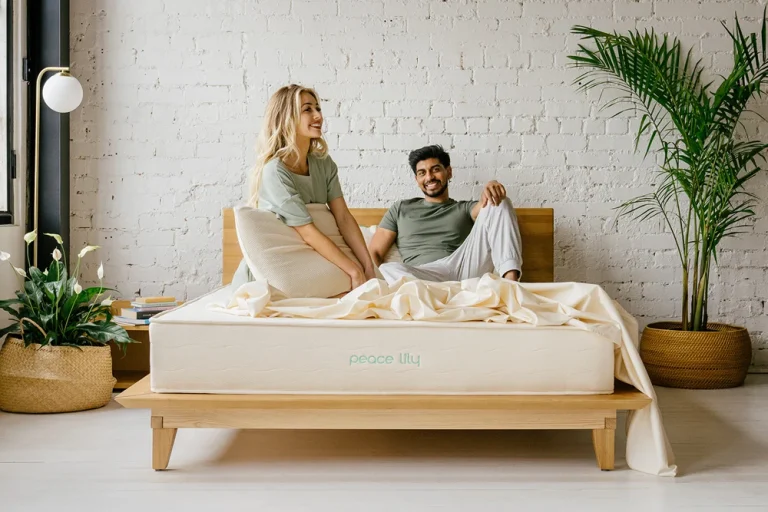
Latex returns to shape the moment you move, where memory foam holds the dip you were lying in. If getting out of the same position is part of what hurts in the morning, that difference is the whole point. Edge support scores 9.0, which is what you push against to get up, and its cotton cover is certified organic rather than simply described as natural. Support scores 8.8 and comfort 8.5 in our review, which is where this 8.7 comes from.
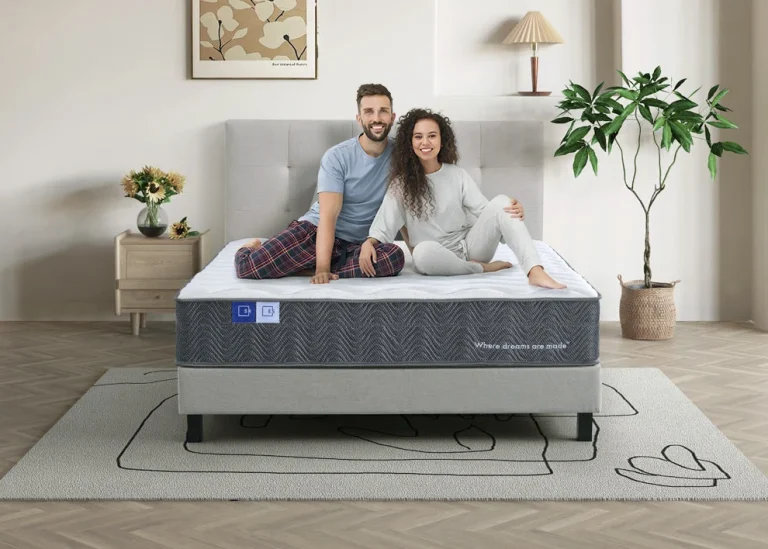
Sleep Republic pocket springs in three zones under a thinner comfort layer. Sleep Republic rates it Firm, 8 out of 10, a step above the medium-firm band the research favours, so it suits people who already know they sleep better on a firm bed. You keep the 150-night trial, the joint longest on this page, and save several hundred dollars. Support scores 8.8 and comfort 8.0 in our review, which is where this 8.4 comes from.
Could a sagging mattress be causing your back pain?
Everything above assumes the problem is the mattress you are choosing. Sometimes the problem is the mattress you already have: a bed that has collapsed in the middle puts your spine in a hammock every night, and no amount of medium-firm theory helps until that is fixed.
For that specific case the answer is genuinely a firm mattress, for an adult who sleeps on their back or front, and our firm mattress guide covers that end of the range. It is the exception, not the rule: the evidence says a very firm surface is the wrong default for back pain generally.
What do “orthopaedic”, “chiropractic” and “doctor recommended” mean?
These three words appear on a great many Australian mattresses and none of them is a regulated term. Any manufacturer can print “orthopaedic” on a label. There is no test to pass and no body that checks.
What is checkable is a named third party putting its name to a specific mattress. In Australia that mostly means the Australian Spinal Research Foundation, which endorses Yinahla and Sleep Republic among the mattresses here, and independent testers such as Bedbuyer, whose Best Back Care award went to Yinahla. When you see “chiropractor designed” with no chiropractor named, treat it as decoration. When you see a named organisation, you can go and look it up — which is the difference.
What is the best mattress for lower back pain?
Lower back pain is the most common form and the one the Lancet trial studied directly, so the medium-firm finding applies to it most strongly. Two practical points follow.
First, the hips decide it. Lower back pain is usually a consequence of the pelvis dropping below the line of the spine overnight, which is why zoning — springs that firm up under the heaviest part of you — does more for the lower back than raw firmness does. Yinahla and Sleep Republic both zone: nine zones on the Yinahla, seven on the LUXE and three on the budget ES.
Second, the base matters as much as the mattress. A slat base with gaps wider than 7cm lets any mattress dip between the slats, and most warranties exclude the damage that causes. If your bed base is older than the mattress, check it before you spend anything.
What does “back support” actually mean in a mattress?
Support is not firmness. A concrete floor is extremely firm and supports nothing: it holds your shoulder blades and your hips and leaves the curve between them unsupported. Support means the surface follows the shape of your spine and holds it there, which requires give in some places and resistance in others.
That is what the support sub-score on each card above measures: whether the mattress holds the spine level for the body lying on it. In practice it comes from three things — spring count and gauge, zoning, and what sits on top of the springs. A 1,850-spring hybrid with latex above it supports a back. A thick slab of soft foam does not, however comfortable it feels in a showroom.
What if it is arthritis, hips or shoulders rather than your back?
Back pain shares most of its mattress advice with joint pain, but not all of it. If your pain is in the joints rather than the spine — and particularly if it is arthritis — the priorities shift towards pressure relief and an edge firm enough to push up from. We have a separate guide for that: best mattress for arthritis in Australia.
If the pain is mostly at the hip or shoulder and you sleep on your side, the pressure question dominates and our side sleepers guide covers it. If you sleep on your back and want the specifics for that position, the same principles apply with less cushioning needed at the shoulder. And if you weigh over 100kg, the physics change enough to be worth reading the heavy sleepers guide instead.
Back pain and mattresses: common questions
Continue your research
Best Mattress for Back Sleepers · Best Mattress for Arthritis Australia · Best Firm Mattress Australia · Best Mattress for Side Sleepers · Best Mattress for Heavy People · Every brand we cover, compared