
Last updated: March 2026 · By BestMattressAustralia · 5 min read
The Short Answer
Most mattresses last 7-10 years, but this varies by type and quality. If you’re waking up with pain, your mattress sags visibly, or you sleep better in hotels than at home — it’s probably time. Don’t wait until your mattress completely falls apart; a worn-out mattress affects your sleep quality, back health, and energy levels long before it looks “done.”
7 Signs Your Mattress Needs Replacing
1. You Wake Up with Aches and Pains
If you consistently wake up stiff, sore, or with back/neck pain that improves during the day, your mattress has likely lost its ability to support your spine properly. This is the #1 sign — and the most commonly ignored one.
2. Visible Sagging or Indentations
Press your hand on different areas of the mattress. If you can see or feel dips, valleys, or body impressions deeper than 2-3cm, the internal support structure has degraded. Most warranties cover sagging beyond 20mm.
3. You Sleep Better Elsewhere
If you consistently sleep better at hotels, friends’ houses, or on the couch, your mattress is the problem — not your sleep habits.
4. Increased Allergy Symptoms
Old mattresses accumulate dust mites, dead skin, and allergens over time. If you notice worsening sneezing, congestion, or itchy eyes in bed, your mattress may be the culprit. Regular cleaning helps, but there’s a limit to what cleaning can fix.
5. You Can Feel Springs or Lumps
In spring mattresses, if you can feel individual springs through the surface, the comfort layers have compressed beyond usefulness. In foam mattresses, lumps or uneven firmness indicate foam degradation.
6. Your Mattress is Over 8 Years Old
Even if it “feels fine,” mattress materials degrade over time. Foam loses density, springs lose tension, and hygiene deteriorates regardless of how well you maintain it. If yours is 8+ years old, start shopping.
7. Your Body or Life Has Changed
Significant weight change, a new sleeping partner, pregnancy, injury, or a new health condition can all change what you need from a mattress. A mattress that suited you 5 years ago may not suit you now.
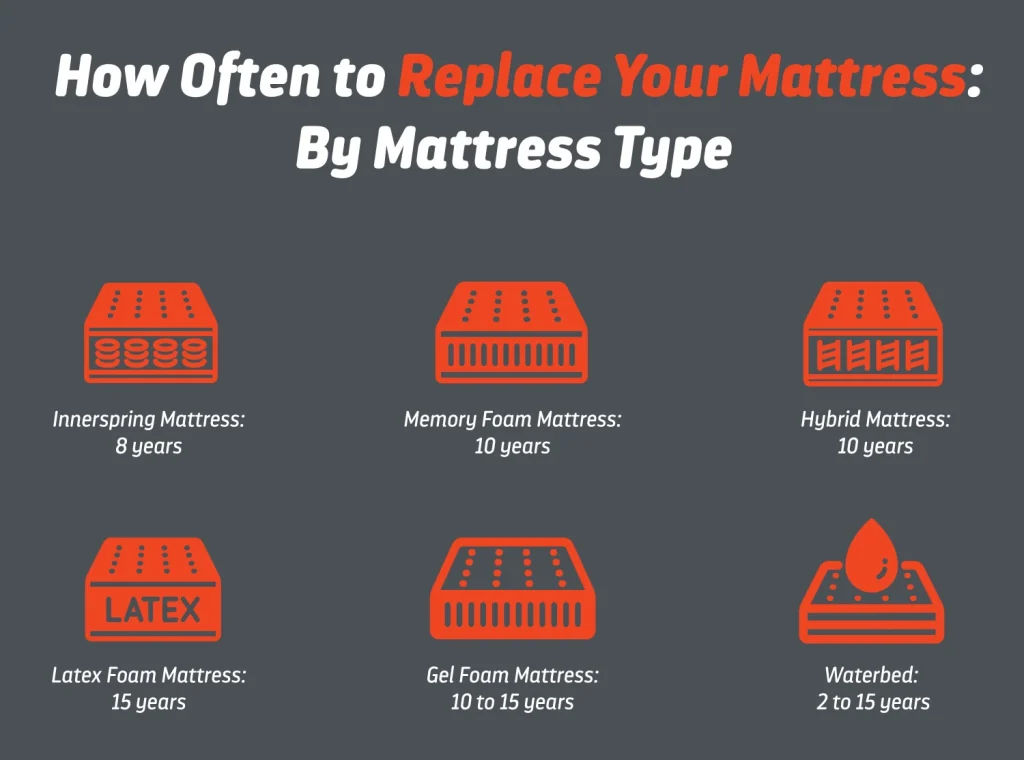
How Long Does Each Mattress Type Last?
| Mattress Type | Expected Lifespan | Examples |
|---|---|---|
| Memory foam | 7-10 years | Ecosa, Emma, Ergoflex |
| Latex | 10-15 years | OneBed (Dunlop latex layer) |
| Hybrid (springs + foam) | 8-12 years | Sleep Republic, Origin |
| Innerspring (traditional) | 7-10 years | Luxara |
| Budget foam | 5-7 years | Entry-level brands |
Factors that shorten lifespan: Heavier body weight, no mattress protector, sleeping on the floor (reduced airflow), not rotating regularly, and humid climates (common in Australia).
What to Look for in a Replacement
Warranty Length Matters
A mattress with a longer warranty typically lasts longer. Ecosa and Origin offer 15-year warranties — a strong indicator of durability.
Trial Periods Save You Money
Don’t guess — test at home. Modern mattress brands offer 100-150 night trials. If it doesn’t suit you, return it free. Emma and Sleep Republic offer the longest at 150 nights.
Consider Your Sleep Position
Your ideal replacement depends on how you sleep:
- Back sleepers: Sleep Republic or Origin for firm support
- Side sleepers: Emma or Luxara for pressure relief
- Unsure: Ecosa or OneBed for adjustable firmness
- Not sure at all: Take our 60-second Mattress Quiz
Budget Considerations
You don’t need to spend $2,000+ for a quality mattress. OneBed at $939 and Origin at $737 both use quality materials; Origin backs its with 15 years, OneBed with 10. See our full Best Mattress Under $1,000 guide.
How to Extend Your Current Mattress’s Life
If you’re not ready to replace yet, these tips help extend its useful life:
- Use a mattress protector — prevents stains, moisture damage, and allergen buildup
- Rotate 180° every 3-6 months — distributes wear evenly
- Don’t sit on the edge regularly — accelerates edge compression
- Ensure proper support — use a quality bed base with slats no more than 8cm apart
- Keep it clean — follow our mattress cleaning guide
- Control humidity — use a dehumidifier in damp climates, ensure airflow under the mattress
Frequently Asked Questions
Q: Is 10 years too old for a mattress? For most mattress types, yes. Memory foam and budget mattresses typically need replacing by 7-10 years. High-quality latex mattresses can last 15 years. If your 10-year-old mattress still feels supportive and you sleep well, it may have more life — but start monitoring for signs of wear.
Q: Can a mattress topper fix an old mattress? A topper can temporarily improve comfort, but it can’t fix a mattress with structural problems (sagging, broken springs, degraded foam). Think of it as a bandaid, not a cure. If your mattress has visible sagging, a topper won’t restore proper spinal alignment.
Q: Should I flip or rotate my mattress? Most modern mattresses are one-sided (designed to sleep on the top only) — don’t flip them. Do rotate 180° (head to foot) every 3-6 months. Luxara and some traditional mattresses can be flipped; check your brand’s instructions.
Q: What should I do with my old mattress? In Australia, most mattress-in-a-box brands collect your old mattress when delivering the new one (check each brand’s policy). You can also contact your local council for bulk waste collection, donate to charities like the Salvation Army (if in good condition), or use services like 1800-GOT-JUNK.
Ready for a new mattress? See our Best Mattress Australia 2026 comparison or take our 60-second Mattress Quiz.
Affiliate Disclosure: We may earn a commission through affiliate links at no cost to you.