Couples Guide 2026
Best Mattress for Couples Australia
There is no single best mattress for two people — it depends entirely on which of you is complaining, and about what. Find your problem below.
Updated: October 2026 · 4 problems, 6 mattresses · 8 min read
The short answer. It depends on the problem. If a partner’s movement wakes you, the
Yinahla scores highest for motion isolation here (9.5); if you disagree on firmness, the
Sleeping Duck lets each side be set differently; if you keep rolling into the middle, the
Luxara Platinum has the strongest edges here (9.3); and if one of you runs hot, the
Emma Comfort is the coolest pick. Six of the seven mattresses below pay us a commission; Koala is the one that does not.
Most “best mattress for couples” lists rank five mattresses one to five, which quietly assumes every couple has the same problem. They do not. One couple is being woken up; another cannot agree on firmness; a third keeps rolling into the middle. Those three problems have three different answers, and the mattress that solves one can make another worse — a very firm mattress isolates movement beautifully and is a disaster if one of you wanted soft.
So this page is not a ranking. Pick the sentence below that sounds like your bedroom.

Where the numbers come from. Motion isolation and edge support are sub-scores from our own reviews where we have them. Where we do not, the figure is derived from Bedbuyer’s Partner Disturbance assessment and the difference in their wording is the difference in the score — “very minimal” is not the same as “present but not significant”. Every figure on this page is checkable against a published source.
Problem One
“You wake me up every time you move”: partner disturbance and motion isolation
This is the most common complaint and the easiest to fix. Movement travels through a mattress when the whole surface is connected — pull one side down and the other side follows. Individually wrapped pocket springs break that connection: each spring compresses on its own, so your partner getting out of bed at 6am moves the springs under them and almost nothing else. Dense foam does something similar by absorbing movement rather than transmitting it, which is why the two best answers here are built completely differently.
Best answer
Bedbuyer’s verdict is that the dual pocket spring system “performs remarkably well in isolating movement”, and the reason is the construction: a nine-zone pocket spring unit with a layer of micro pocket springs on top, each spring wrapped on its own, so the springs under your partner move without pulling on the ones under you. Its edge support is rated superb as well, so it answers two of the four problems on this page at once. The catch is price: this is the most expensive mattress we cover by a wide margin, and if movement is your only complaint, the two below solve it for far less.
🛏️ 150 nights, and a 20-year warranty — the longest of any mattress we score
9 zonesDual pocket springs
9.2Edge support
150 nightsTrial
4.9 / 5Owner rating
Cheapest that works
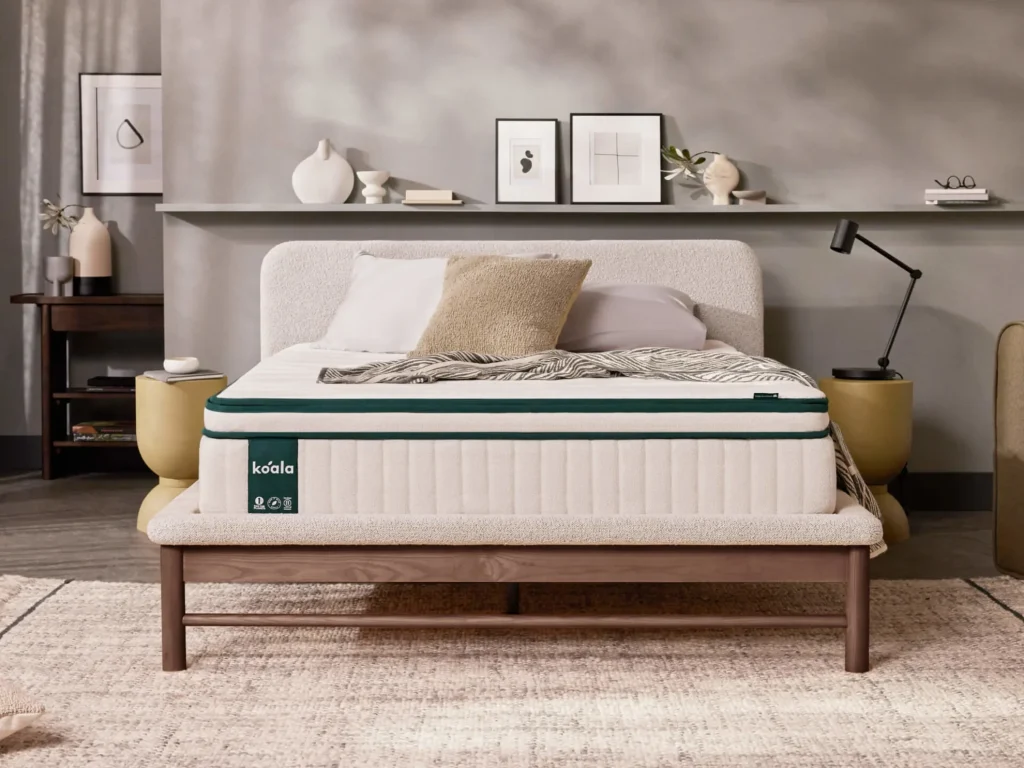
We earn nothing if you buy this, and on this one problem it is close to the best on the page. Koala’s foam absorbs movement rather than transmitting it — the marketing calls it zero disturbance and for once the marketing is roughly right. Where it falls down is the next problem: edge support scores 6.8 in our review, among the weakest here, so if you also roll into the middle this is the wrong pick. Same-day metro delivery is real and nobody else matches it.
🛏️ 120 nights, and it can be on your bed today in most cities
All-foamConstruction
6.8Edge support
120 nightsTrial
4.8 / 51,549 owners
Problem Two
“One of us wants firm, the other wants soft”: a different firmness on each side
This is the problem no ranking can solve, because there is no firmness that is correct for two people who disagree. Buying the average makes both of you mildly uncomfortable rather than one of you happy. Weight difference makes it worse: the same mattress compresses further under a heavier person, so a surface that feels medium to one of you genuinely is softer under the other. There is exactly one real answer, and it is not a compromise.
The only real answer
On larger sizes you choose a half-and-half configuration: firm on one side, softer on the other, in the same mattress. If the two of you genuinely disagree, nothing else on this page competes — every other option asks one of you to lose. You can also change it after delivery rather than returning the whole thing, which matters because firmness disagreements usually surface weeks in, not on the first night. We earn a commission through Skimlinks, an affiliate network, if you buy this. It is here because on this specific problem there is no alternative, and pretending otherwise would be dishonest.
🛏️ 100 nights, and you can swap the firmness instead of returning it
Per sideAdjustable
9.0Edge support
100 nightsTrial
4.8 / 55,742 owners
If you both want the same, but do not know what
Be clear about what this does and does not do: Ecosa’s three settings change the firmness of the whole mattress, not each side. It solves indecision, not disagreement. If neither of you is sure what you want, being able to rearrange the layers beats guessing and returning — and Bedbuyer rates its motion isolation as very good, which is what you would expect from all-foam. If you actually disagree, this will not help you. Also worth knowing: edge support scores 6.5, so it is a poor answer to the next problem.
🛏️ 100 nights, three firmness settings, 15-year warranty
3 settingsWhole bed
6.5Edge support
15 yearsWarranty
4.6 / 5555 owners
Problem Three
“We keep rolling into the middle”: edge support
A mattress with weak edges effectively shrinks. You cannot use the outer 10cm without feeling like you might slide off, so both of you migrate inward and end up sharing less bed than you paid for — and touching, which is fine until one of you is hot. The fix is a reinforced perimeter: firmer springs or a foam encasement around the outside, so the edge holds when you sit on it to put your shoes on. This is also where all-foam mattresses are weakest, which is why the answer here is a spring build.
Best answer
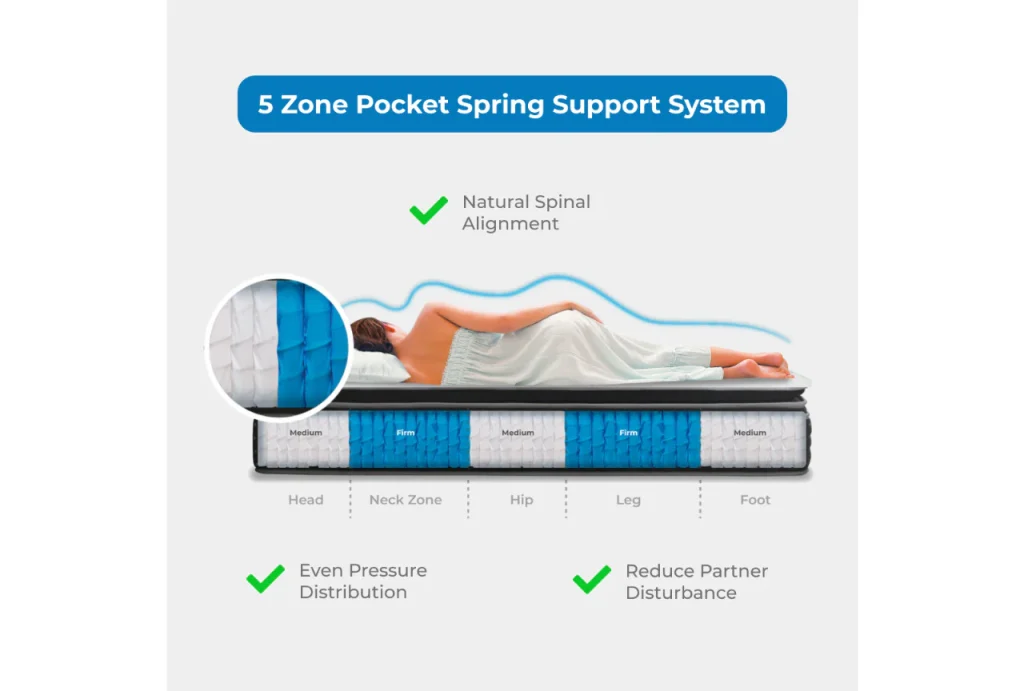
Strong edges (9.3, the highest on this page) come from a high-density foam casing around two layers of pocket springs, 2,020 in a Queen, there to stop the edges sagging so you can use the full width of the bed. The catch is movement: Bedbuyer says partner disturbance is “present but not significant”, so if one of you wakes the other, start with Problem One instead. It also costs more than the Sleep Republic and has no large pool of verified owner reviews, so its score rests on its published build and one independent review. Luxara says it makes its mattresses in Melbourne, and the Platinum is delivered flat.
🛏️ 100 nights to decide, with a 30-night minimum
9.3Edge support
8.0Motion isolation
2,020Pocket springs
10 yearsWarranty
Exclusive code
$100 off any Luxara mattress, applied for you through this linkBESTMATTRESS100
Want to spend less? The Luxara Classic ($1,890 Queen) has a 7cm pillow top and comes in Soft, Medium or Firm. We score the Platinum only.
Safest all-rounder

Strong edges (9.2, level with the Yinahla and just behind the Luxara) at a medium-firm 7 out of 10 (Sleep Republic’s own rating), which is the firmness most couples land on when neither of them is at an extreme. 1,850 pocket springs handle the movement problem as well — it scores 9.0 there — and it carries the Australian Spinal Research Foundation endorsement if either of you has a back. This is the pick we make most often across the whole site, and for a couple with no single dominant complaint it is the safest choice here.
🛏️ 150 nights — the longest trial on this page, alongside Yinahla and Emma
9.2Edge support
9.0Motion isolation
1,850Pocket springs
4.8 / 52,157 owners
Problem Four
“One of us is always too hot”: cooling for two
Two bodies in one bed generate roughly twice the heat of one, and they generate it in the same place. That makes a mattress that runs warm noticeably worse for a couple than for a single sleeper — and it is usually only one of you complaining, which makes it a negotiation rather than a purchase. Foam holds heat because it wraps around you; springs let air move between them. The exception below is a foam that was engineered around the problem.
Best answer
Emma pays us a commission through Skimlinks, an affiliate network; that has no bearing on its cooling score of 9.0, one of the highest we give. Airgocell is open-cell foam with airflow channels cut through it, so it contours without trapping heat the way ordinary memory foam does. For a couple that matters more than it sounds. The trade-off is the third problem on this page: edge support scores 6.0, the weakest here, so if you also roll into the middle look at Sleep Republic instead — its cooling is lower at 8.2 but its edges are far stronger.
🛏️ 150 nights — long enough to test it through a change of season
9.0Cooling
6.0Edge support
150 nightsTrial
4.6 / 58,914 owners
Common Questions
What is the best mattress for partner disturbance in Australia?
If movement is the only problem, Yinahla scores highest for motion isolation on this page (9.5), on a nine-zone pocket spring unit topped with a layer of micro pocket springs. Koala is the cheapest mattress that works (9.2), because its foam absorbs movement instead of passing it on.
Which is better for motion isolation, pocket springs or foam?
Both work, in different ways. Individually wrapped pocket springs move on their own, so a partner getting up compresses only the springs under them, while dense foam absorbs the movement instead of transmitting it. What carries movement across the bed is a connected spring unit, the kind found in older innerspring mattresses.
What size mattress is best for a couple?
A Queen (153 × 203cm) gives each of you about 76cm, narrower than a single bed. A King (183 × 203cm) gives each of you about 91cm, roughly the width of a single bed, and is the simplest fix for partner disturbance if your room fits it. Our Australian mattress sizes guide compares every size.
Can a couple have a different firmness on each side?
Only with a mattress built for it. Sleeping Duck lets you choose a different firmness for each half on larger sizes, and change it after delivery. Ecosa changes the firmness of the whole bed, which helps if you are both unsure, not if you disagree.
Buying a Mattress With Someone Else
- Work out whose problem it is first — most couples buy for the complaint that gets voiced most often, which is not always the one that matters most. If only one of you is unhappy, solve that
- Size up before you spend up — going from a Queen to a King fixes more couple problems than any feature does, and often costs less than the difference between two mattresses
- Weight difference changes the maths — the same mattress compresses further under a heavier person, so “medium” is not the same firmness for both of you. This is the case for per-side adjustment, not a detail
- Test at the edge — sit on the side of the bed to put your shoes on during the trial. If the edge collapses, you have effectively bought a narrower mattress
- Use the whole trial — the disagreements that end in a return usually surface in week four or five, not week one. Do not decide early because it feels fine
- Fix heat with bedding first — separate quilts, and cotton or linen rather than polyester, are far cheaper than a new mattress and solve more temperature arguments than either partner expects
FAQ
More questions from couples
What actually stops a partner waking you?
Individually wrapped pocket springs, or dense foam. Both work, differently. Springs break the connection across the surface so movement stays local; foam absorbs the movement instead of passing it on. What does not work is an old-style innerspring where the coils are joined — those transmit everything.
We disagree about firmness. Is there really no compromise?
Not a good one. Buying the midpoint gives you a mattress that is too soft for one of you and too hard for the other, which is two unhappy people rather than one. A mattress with a different firmness on each half is the only genuine fix, and Sleeping Duck is the only one on this page that offers it. If that is out of budget, the honest fallback is to buy for whoever sleeps worse — not to split the difference.
Is a King worth it over a Queen?
For two adults, usually yes, and it is the most underrated fix on this page. A King gives each of you about 91cm, roughly the width of a Single bed, instead of 76cm each on a Queen. Larger sizes also isolate motion better simply because there is more distance between you. If you are choosing between a better mattress in a Queen and a decent one in a King, the King often wins.
Why does edge support matter for couples specifically?
Because you are using the whole surface rather than the middle of it. When the edges give way, both of you drift inward and end up sharing less mattress than you bought — which is also why couples on soft-edged mattresses often say they feel crowded on a bed that is objectively big enough. All-foam mattresses are weakest here; the one we point to in that section is a spring build for that reason.
One of us sleeps hot and the other is always cold. Now what?
Start with the bedding rather than the mattress. Separate quilts at different weights solves this for most couples and costs a fraction of the alternative — it is standard in Scandinavia for exactly this reason. If the mattress genuinely is the problem, springs beat foam for airflow, and the one foam exception is Emma. Do not buy a cooling mattress to solve a quilt argument.
📢 Affiliate Disclosure: This page contains affiliate links and we may earn a commission at no extra cost to you. Seven mattresses appear here and six of them pay us a commission (Sleeping Duck, Ecosa and Emma through Skimlinks, an affiliate network, and Luxara through Shopify Collabs). Koala is the one we earn nothing from. Commission plays no part in which mattress answers which problem. This page is not ranked, because two people rarely have the same problem and a list numbered one to five would have hidden that. Prices change often, so we link to the brand rather than quoting a figure that goes stale. Last updated October 2026.